Tutorial

Let's discover Katalog in less than 5 minutes: create a collection, catalog a folder, and search in it.
Download and run
Download Katalog for Linux, Windows or macOS: see Multi-Platform Support for the available packages and the system requirements.
First start
On the first start, a welcome message gives the language and theme that were applied (they can be changed later in the Settings), and offers:
- Create new...: creates a new collection, the place where Katalog keeps all its data. A dialog proposes where to save it, as a database file (
.db). A folder in your user directory is a good place. - Open existing...: opens a collection database (
.db) created before, for example with Katalog 2.
Closing the dialogs without choosing is possible: Katalog starts without a collection, and one is opened or created later from the drawer (see Interface).
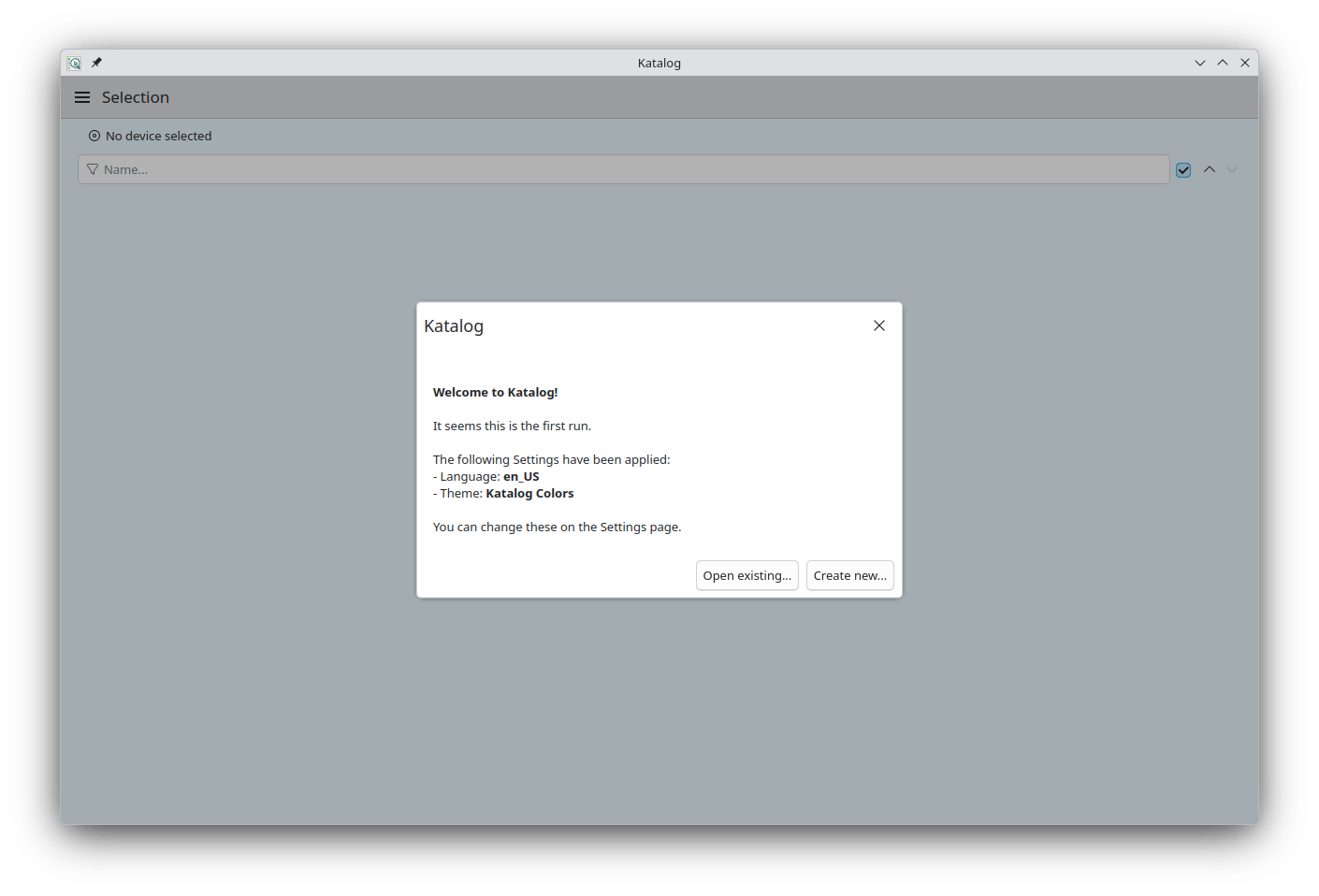
After Create new..., a message lists the three steps to create a first catalog. OK opens the Create page.
Create a catalog
A catalog is the index of the files of one folder.
- Source path: type the folder to catalog, or choose it with Select the path. For example, your Documents folder.
- Storage: keep Local disk, the storage device that Katalog created for your computer.
- Catalog name: type a name, or use Generate name from path.
- Click Create at the top of the page.
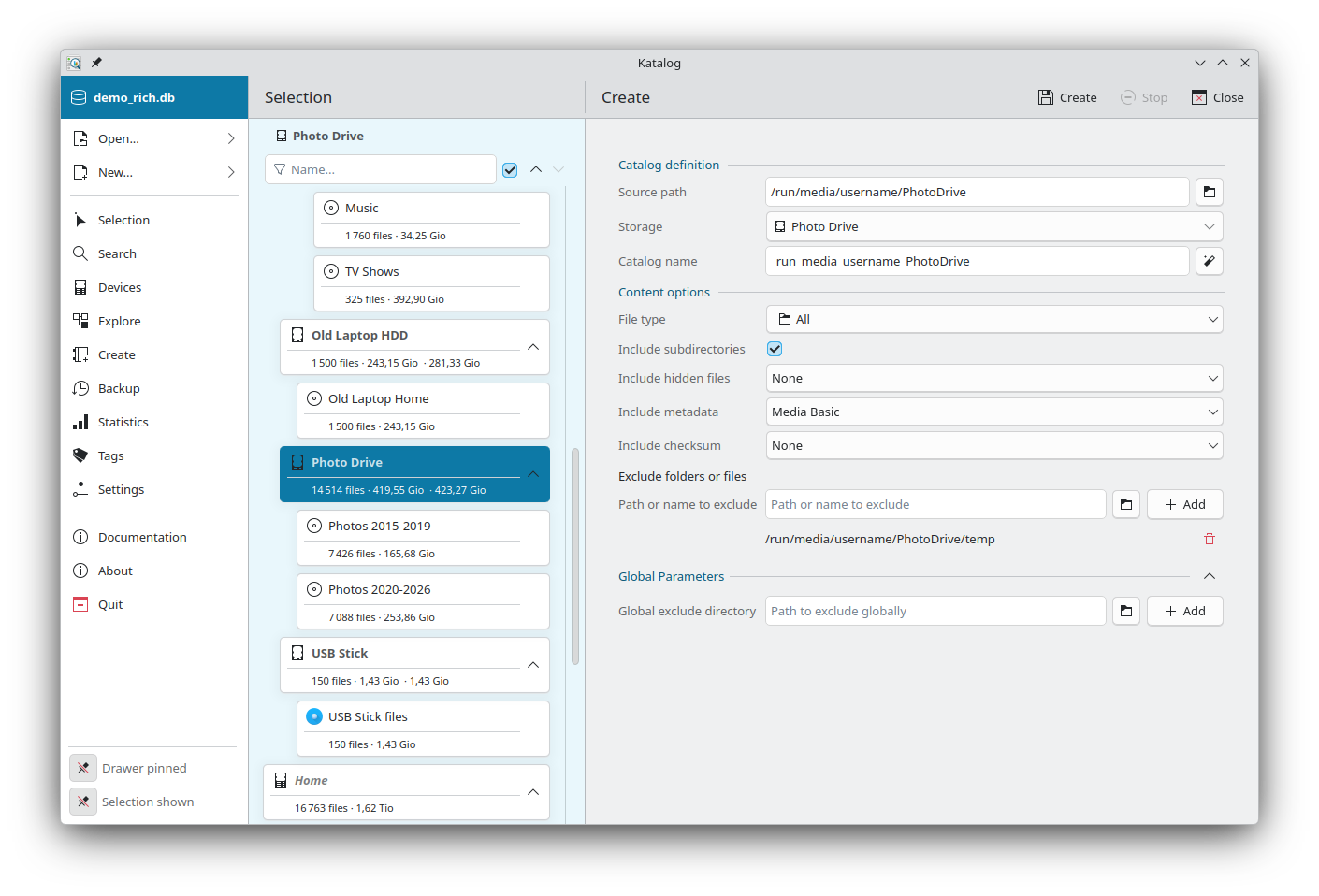
The progress is shown at the bottom of the window. When it ends, a message confirms that the catalog was created, and it appears in the device tree of the Selection page, under Local disk.
Search files
- On the Selection page, right-click the new catalog and choose Search: the catalog is selected and the Search page opens next to it.
- Type a text in the file name field, for example
report. - Click Search (or press
Enter).
The Results page opens to the right, with the files found. Click a file to open it, or right-click it for more actions.
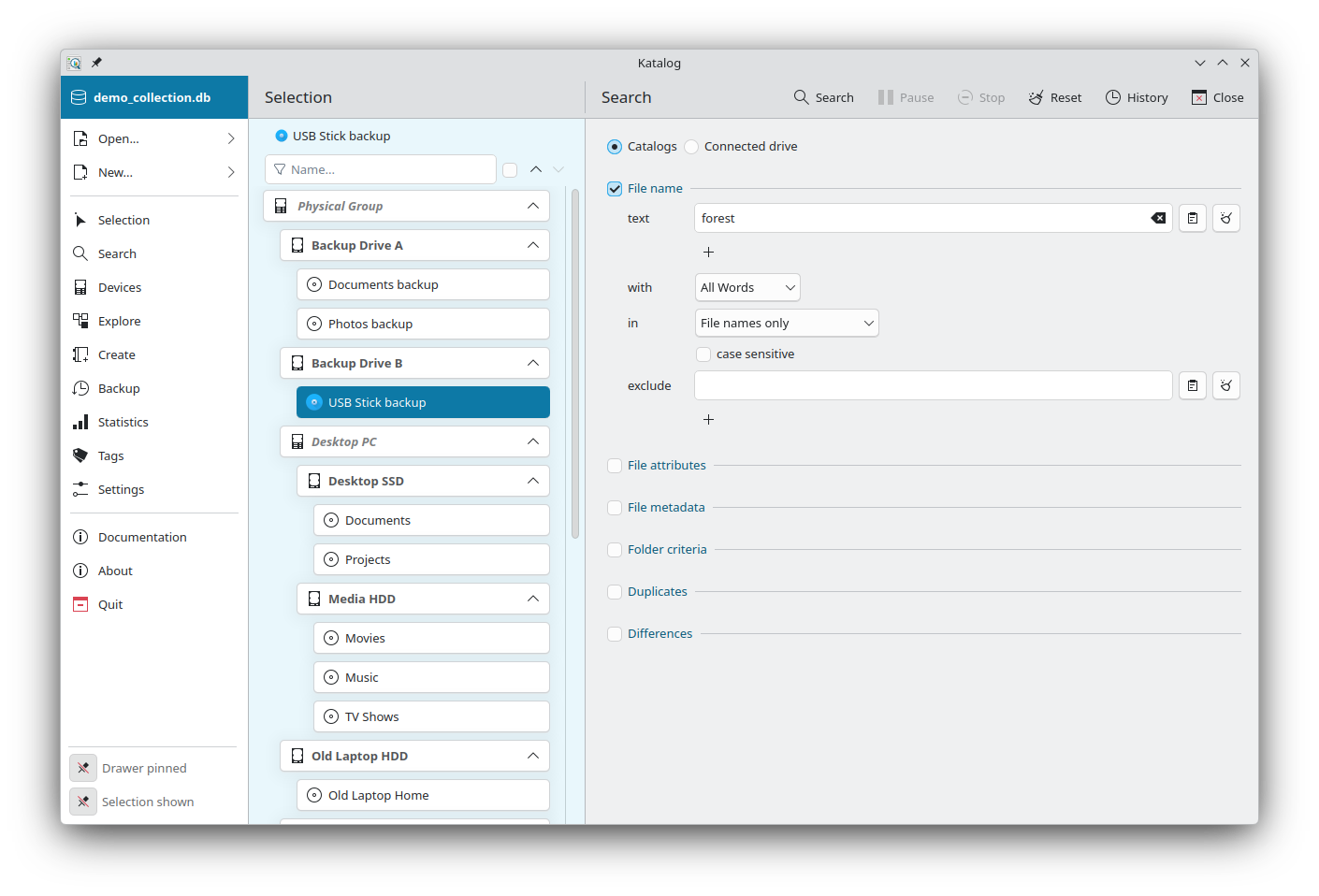
The catalog stays searchable when the folder or the drive is not connected: this is what Katalog is for. Catalog your external drives the same way, each under its own storage device (see Devices), and search all of them at once by selecting the Physical Group on the Selection page.
Next steps
- Use more search criteria: size, dates, file types, duplicates, differences.
- Browse a catalog in Explore.
- Organize your drives in Devices.
- Back up a folder with Backup.
- All the parts of the window are described in Interface.